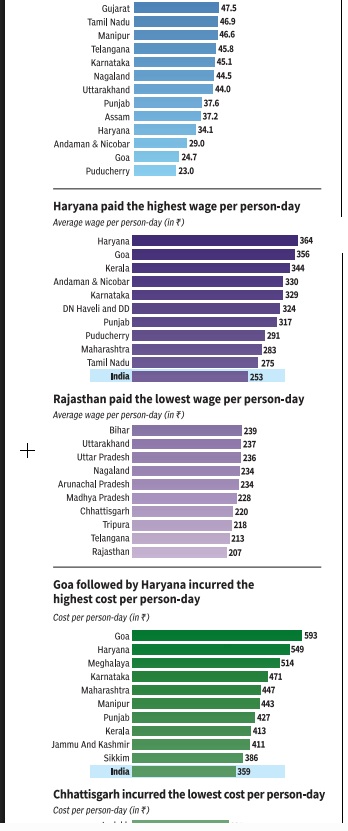
 Work days up but Centre may spend less in rural job scheme https://www.thehindubusinessline.com/economy/work-days-up-but-centre-may-spend-less-in-rural-job-scheme/article70408014.ece COST-EFFECTIVE. Analysis points to a contraction in the actual reach of MGNREGA By 2024-25, this number slipped to 50 days, with the Centre's contribution falling to ₹85,640.55 crore. While households received 48-52 days of work annually over the past five years, the average dropped to about 36 days so far this fiscal, with the Centre's spend at ₹69,013.73 crore.
https://www.thehindubusinessline.com/economy/government-fails-to-table-viksit-bharat-g-ram-g-bill/article70399997.ece Despite being slated for introduction in the supplementary list of Lok Sabha business, the government did not table the Viksit Bharat Guarantee for Rozgar and Ajeevika Mission (Gramin) Bill, 2025 (Viksit Bharat-G RAM G) on Monday. This Bill proposes replacing the 2005 Mahatma Gandhi National Rural Employment Guarantee Act, deleting the name of the Father of the Nation from its title, an omission that was roundly criticised by the Opposition.
the fund-sharing pattern between the Centre and the States. Section 22 mandates the ratio of fund sharing between Centre and northeastern/Himalayan States as 90:10 while it will be 60:40 for all other States and UTs with legislature. It also said beyond 125 days, it will be the responsibility of the States to bear the expenditure.
https://theprint.in/opinion/vb-gramg-bill-strikes-heart-mgnrega/2807902/ MGNREGA’s core strength was: if you needed work, you got work. VB-GRAMG’s funding model means work will only be available if a state has the budget and the Centre has approved the allocation.
https://www.downtoearth.org.in/governance/two-decades-of-the-right-to-work-under-mgnrega-and-the-turn-we-are-taking-now Most MGNREGA workers are marginal farmers or landless labourers who turn to public works under NREGA precisely when they do not have anything to do and their agricultural incomes are low, uncertain, or delayed. A legal ban on work during certain months limits their choices and does not protect livelihoods. It replaces this rights-based framework under the Act with a behavioural tone decided by the state and the arrangement of workers deciding when they need employment to one where the state decides when the poor are allowed to work and when they are not.