
Gadchiroli Sees Decline in Maoism, Increase in Mining
Gadchiroli, the 'Favourite District' of Devendra Fadnavis, Sees Decline in Maoism, Increase in Mining https://thewire.in/politics/gadchiroli-the-favourite-district-of-devendra-fadnavis-sees-decline-in-maoism-increase-in-mining by Santoshi Markam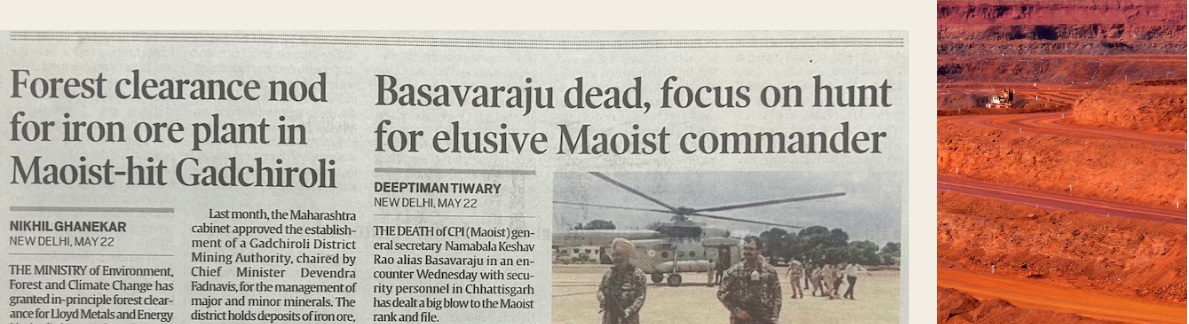
Vinod Mandavi, an activist with the Adivasi Vikas Parishad of Potegaon, accused the Gadchiroli collector of fabricating gram sabha documents in 2010, to falsely demonstrate public consent for mining. Allegations suggest that such counterfeit gram sabha documents were produced with the assistance of village gram sevaks in Damakondawahi, located in the Bande area of the Etapalli block.
Retotalising Capitalism
Retotalising Capitalism: A Very Short Introduction to its History https://www.historicalmaterialism.org/article/retotalising-capitalism-a-very-short-introduction-to-its-history/ Jairus Banaji In my Brief History of Commercial Capitalism, I argued that, in retrospect, Marx turns out to have been wrong to think of Britain as the incarnation of industrial capital that subordinated commercial capital, since the latter was entrenched at the heart of the British economy (as Geoffrey Ingham argued in the eighties) and a much better incarnation would soon emerge with the Second Industrial Revolution when modern vertically integrated firms would undercut the position of merchant firms in both the U.S. and Germany.
1% Controls 60% of Total Wealth in India, Rich to Get Richer: Report
Only one per cent households control around 60% of the total wealth in India, indicating to the highlt concentrated nature of household wealth in the country. 1% Controls 60% of Total Wealth in India, Rich to Get Richer: Report - The Wire
According to a recent report by brokerage firm Bernstein, the super rich in India, estimated to be around three million households hold $2.7 trillion in liquid financial wealth, reported Business Standard.
ICJ on states’ responsibilities to halt climate change
ICJ delivers an unambiguous order on states’ responsibilities to halt climate change https://scroll.in/article/1084853/icj-delivers-an-unambiguous-order-on-states-responsibilities-to-halt-climate-change Meena Menon 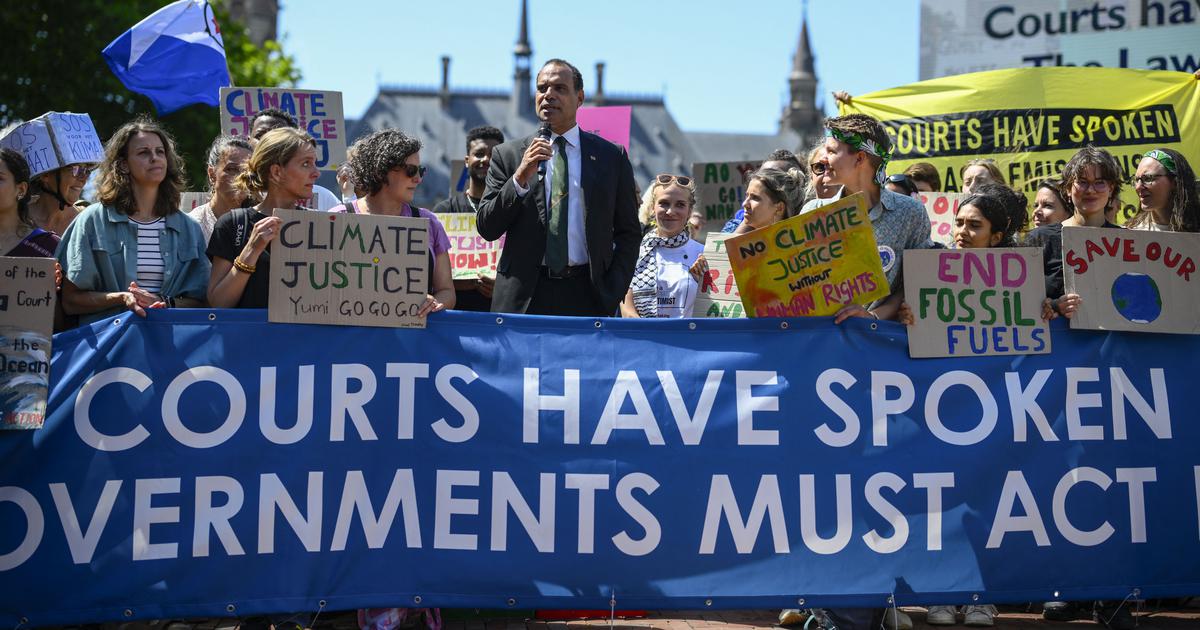 The United Nations’ judicial organ paved the way for states to be held accountable for fossil fuel emissions and the resultant climate harm. failure of states to take measures to reduce greenhouse gas emissions by continuing fossil fuel production, granting exploration licences or fossil fuel subsidies constituted an internationally wrongful act. States also have an obligation to regulate private actors as a matter of due diligence. in the event that restitution should prove to be materially impossible, responsible states have an obligation to compensate.
Press Freedom Under Modi Worse Than During Emergency
On November 26, 1947, a little over three months after India’s independence, Mahatma Gandhi presciently cautioned that use of media by a ruling party for its own propaganda and image building would usher in dictatorship. He said this while dealing with a complaint that the Congress party was employing radio for broadcasting information about itself and its activities. “If the Congress uses the radio, etc., like this for its own propaganda, it is bound to bring about dictatorship in the end,” he warned.
Are Election Malpractices Undermining India's Claims of Being 'the World's Biggest Democracy'?
In recent years, the election process in India has been converted into one party’s fiefdom. Two sets of methods have been weaponised to subvert the verdict of the people, which are adopted at each stage of the electoral voting system. They are used before voting day, or on the voting day, and after the voting day.
https://thewire.in/government/election-malpractices-india-voter-rolls-evm
Names from voter lists were allegedly deleted ahead of the Delhi elections, as well as Maharashtra state elections. Both occurred in quick succession after the Lok Sabha polls. This is an age-old method which has now been taken to new heights.
In the age of algorithm, we must revitalise the conversation on the ‘freedom of thought’
Social platforms have transformed how we communicate, often encouraging users to share without reflection. Rather than appealing to our reasoning faculties, these systems exploit cognitive biases, fostering addictive behaviours that erode our capacity for focused thought. This manipulation of attention has far-reaching implications, not only for individual cognition but also for collective autonomy.
Justice Anthony Kennedy of the U.S. Supreme Court once noted, “Minds are not changed in streets and parks as they once were. To an increasing degree, the more significant interchanges of ideas and shaping of public consciousness occur in mass and electronic media”. This observation underscores a shift from traditional public discourse to algorithmically mediated interaction, where information flows are technology driven.
In refusing to glorify the use of fear, violence, we may tap hidden strengths
 In the spectrum of himsa and ahimsa, we are free to look at the whole story. The reward may not be complete freedom from fear, but in refusing to glorify the use of fear, we may tap hidden strengths.https://indianexpress.com/article/opinion/columns/in-refusing-to-glorify-the-use-of-fear-violence-we-may-tap-hidden-strengths-10025062/ ..(not turning the other cheek ) the worst forms of impotence are a consequence of rage, not nonviolence. The essence of how contemporary practitioners understand “ahimsa parmo dharma” is: If you act from a higher level of awareness, drawing on finer human emotions, you can work out effective, refined strategies to overcome injustice... Nonviolence defines victory as standing firm in your strength and having the willingness to co-exist, co-thrive with the “other”.
Great 35, MKSS
 It's been 35 years , (1990 to 2025), since we assembled at Bhim, in Rajsamand District to launch the MKSS. The early years were tumultuous but the path to equality and justice was clear, and the impediments many.
The minimum wages battles led to the RTI and MGNREGA and later to the Rights based laws. The years have passed packed with the million issues of denial of basic rights to survive, yet the struggle continues, despite usympathetic structures and governments.